Regional Symposium on Open Science in the Arab Region
Regional Symposium on Open Science in the Arab Region – Rabat 2024
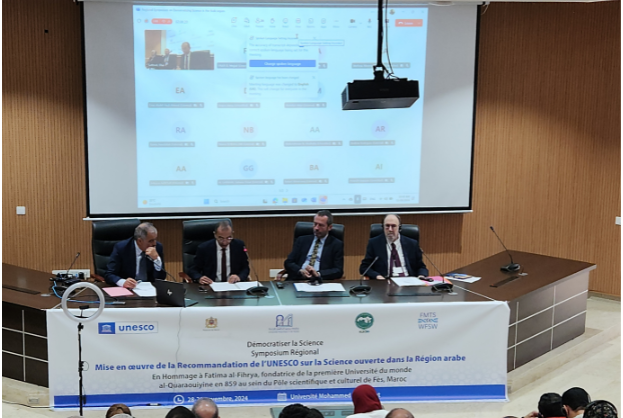
On 28 and 29 November 2024, Rabat hosted the Regional Symposium on Open Science in the Arab Region, co-organised by the World Federation of Scientific Workers (WFSW), UNESCO and Mohammed V University of Rabat, bringing together policymakers, researchers, academics and representatives of scientific institutions from the Arab region and beyond.
Held under the theme “Democratising Science”, the symposium focused on practical measures and pathways for implementing the 2021 UNESCO Recommendation on Open Science in the Arab Region, with particular attention to policies, infrastructures, funding, legislation, skills and scientific cooperation. (AR_UNESCO-FMTS_Open Science Symposium_ 04 04 2024)
The WFSW was closely involved in the preparation of the symposium, notably through Mehdi Lahlou, member of the WFSW International Secretariat responsible for the partnership with UNESCO and member of the Symposium Steering Committee.
Opening Ceremony
The symposium opened with addresses from representatives of the organising institutions and partner organisations.
In his opening address, Jean-Paul Lainé, Co-President of the WFSW, recalled the Federation’s longstanding commitment to international scientific cooperation and its support for UNESCO’s Open Science initiative. He emphasised the importance of equitable access to science and knowledge in the face of major global challenges, including climate change and social inequalities, and highlighted education, peace, democracy and international scientific cooperation as essential foundations for open science. He also recalled the history and founding principles of the WFSW and the Federation’s early involvement in UNESCO’s Open Science initiative. (Mr. Laine_President of WFSW)
Dr Mohammad Sanad Abu Darwish, representing ALECSO – Arab League Educational, Cultural and Scientific Organization, stressed the need to strengthen scientific and technological cooperation in the Arab world through knowledge sharing and innovation, and highlighted the importance of implementing the UNESCO Recommendation on Open Science in the region.
Eric Falt, Director of the UNESCO Office for the Maghreb in Rabat, reaffirmed UNESCO’s commitment to accessible and inclusive knowledge and to the principles of open science and equitable development.
UNESCO Recommendation on Open Science
During the inaugural plenary session, Jamal Sebanni, Secretary General of the WFSW, Professor at Mohammed V University and member of the Steering Committee, participated as moderator and speaker, highlighting the role of universities in promoting science that is accessible, inclusive and responsive to societal needs.
Ana Persic, UNESCO Programme Specialist for Science, Technology and Innovation Policies and Open Science, presented the 2021 UNESCO Recommendation on Open Science, addressing the principal areas of action required for its implementation.
These include promoting a common understanding of open science; developing enabling policy environments; investing in infrastructures and services; strengthening training, education and digital literacy; fostering a culture of open science; promoting innovative approaches throughout the scientific process; and reinforcing international and multistakeholder cooperation to reduce digital, technological and knowledge gaps. (Rabat_UNESCO_Open science_Recommendation_Ana Persic.pdf)
UNESCO also presented the mechanisms developed to monitor the implementation of the Recommendation by Member States and related regional capacity-building initiatives.
WFSW Contributions and Symposium Sessions
Throughout the two days, plenary and parallel sessions addressed a broad range of topics related to the future of open science in the Arab region, including scientific data sharing, open-access publishing, research infrastructures, emerging technologies and artificial intelligence, research funding, scientific cooperation, the role of universities and research organisations, and the ethical and regulatory dimensions of open science.
The WFSW made a significant contribution to the symposium through the participation of several of its members.
Marc Delepouve, from the Laboratoire Histoire des technosciences en société (HT2S), Conservatoire national des arts et métiers in Paris, and a WFSW member, addressed the relationship between Open Science and belonging to the human community. His contribution explored several dimensions of open science, including access to scientific knowledge, more equitable participation of countries in scientific research, the involvement of civil society in scientific processes, and the preservation of linguistic and cultural diversity. He also stressed the need to reduce scientific, technological and digital inequalities between nations and advocated the creation of a Global Fund for Research to contribute to more equitable access to scientific activity worldwide. (Présentation_Marc-Delepouve)
Dina Bacalexi, member of the WFSW International Secretariat, contributed a paper entitled “Arab Science, Open Science: Heritage, Transmission and Transformation of Knowledge”. Drawing on the historical transmission of scientific knowledge, including Greek medicine through the Arab world and later Renaissance Europe, she explored multilingualism, translation, cultural exchange and the transformation of knowledge, linking this scientific heritage to contemporary principles of openness, inclusiveness and scientific cooperation. (DB_Sci arabe, Sci ouverte Rabat 2024)
Wahid Gdoura, from the University of Manouba in Tunisia, addressed the creation and safeguarding of open scientific knowledge, with particular attention to cognitive equity and balanced access to knowledge at global and local levels.
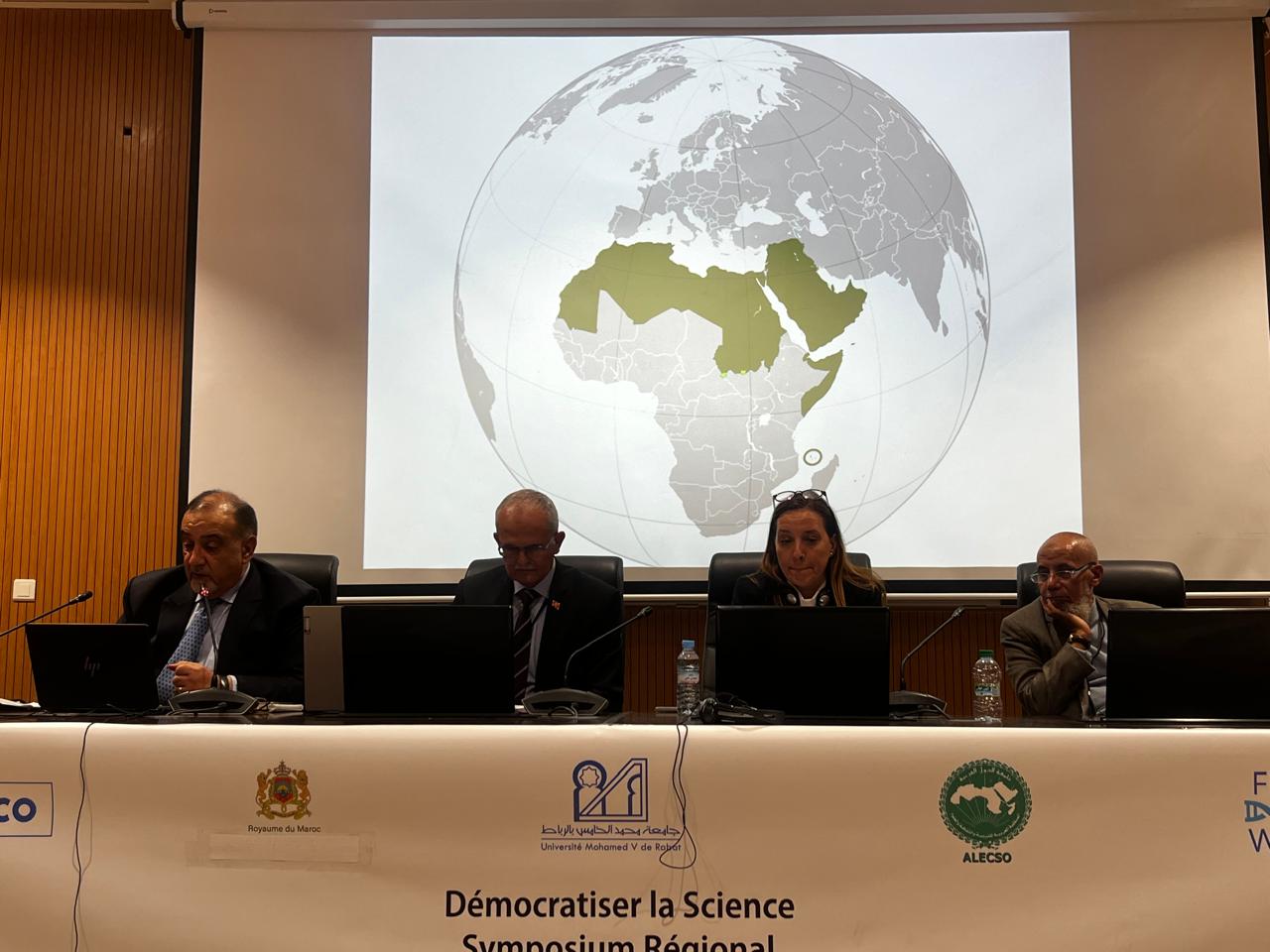
Other contributions addressed, among various subjects, the relationship between scientific and technological capacity and open science, science diplomacy, responsible artificial intelligence, and the opportunities and risks associated with emerging technologies.
In the fifth plenary session, devoted to “A Futuristic Vision for Open Science in the Arab Region”, Mehdi Lahlou, economist and professor, focused on the financing of open science through research and scientific production, highlighting this as a major challenge for the Arab region.
Rabat Resolution and Closing Session
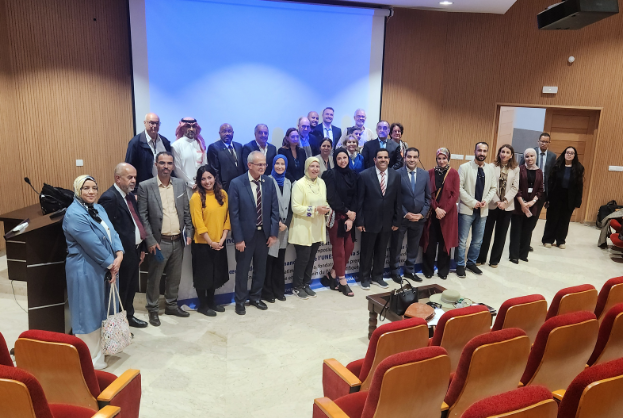
At the conclusion of the symposium, participants adopted a resolution setting out priorities for advancing open science in the Arab region.
The recommendations included strengthening public policies in support of open science; increasing investment in scientific research and digital infrastructures; promoting scientific and digital literacy; improving access to the results of publicly funded research; encouraging the digitisation and open-access dissemination of scientific production; creating greater opportunities for young researchers and women in science; and reinforcing cooperation among Arab countries and with the wider international scientific community. (Symposium-Rabat_Résolution)
The resolution also reaffirmed the importance of open science as an instrument for inclusive and sustainable development, reducing inequalities in access to knowledge and promoting a culture of peace.
The symposium concluded with a closing address delivered by Mehdi Lahlou on behalf of the WFSW. Drawing together the discussions held over the two days, he highlighted persistent challenges in the region, including insufficient investment in research, inequalities in access to digital and scientific infrastructures, limited access to scientific publications, and institutional, legal, political and financial barriers to the circulation and sharing of scientific knowledge.
In his closing address, Mehdi Lahlou also emphasised the importance of women and young researchers, stronger regional and international scientific cooperation, and the contribution of open science to addressing major contemporary challenges, including climate change, water and food security, public health, the energy transition and artificial intelligence.
The closing message reaffirmed a central principle running through the symposium: scientific knowledge reaches its full value when it is shared and becomes a common good. It also underlined the contribution that science and scientific cooperation can make to peace. (Allocution de clôture du Symposium Science ouverte dans la région arabe)
Looking Ahead
The Regional Symposium on Open Science in the Arab Region provided an important platform for dialogue among academics, researchers, policymakers and institutional representatives on practical pathways for implementing the UNESCO Recommendation on Open Science and on the obstacles that remain.
The discussions in Rabat demonstrated that making science genuinely open requires more than access to scientific publications and data: it also requires adequate funding and infrastructures, supportive public policies, scientific and digital capacity, international cooperation and greater participation by society in the production and sharing of knowledge.
The symposium thus reaffirmed the commitment of the WFSW and its partners to the democratisation of knowledge and to a future in which science is more accessible, inclusive, cooperative and shared.
Further information and Symposium documents are available here: Documents: Regional Symposium on Open Science in the Arab Region