WFSW Newsletter – Mar 2026

FMTS-WFSW Newsletter
Welcome
As the WFSW looks to the future, we enter a strategic phase: the 2027–2030 Strategic Plan is being developed to guide the Federation beyond its 80th anniversary, setting priorities in a world marked by interconnected global crises. This plan aims to transform the Federation into a more agile, visible, and influential organisation, capable of mobilising scientists worldwide and strengthening collaboration with affiliated organisations, while remaining firmly committed to scientific ethics and the promotion of peace.
In March, we invite reflection on emerging challenges that confront contemporary scientific practice, including artificial intelligence, human rights, and the responsibilities associated with humanoid technologies. The ethical implications of AI and humanoids are increasingly urgent, encompassing issues from automated decision-making and security applications to the potential objectification of humanoid workers. Addressing these challenges requires a framework grounded in human rights, sustainability, and the responsible use of science, ensuring that technological advances contribute to societal well-being, respect equality, and prevent harmful applications. These discussions align with international principles and the Sustainable Development Goals, reinforcing the Federation’s commitment to ethical research and the promotion of science for peace.
Reflections from the OTC and affiliated organisations have generated concrete proposals, including the organisation of a symposium on open science in Portuguese-speaking countries, in partnership with REALP, CREATE, WFSW, and FCT, and the promotion of discussions on the role of the scientific community in defending peace and opposing war, involving national and international organisations.
In parallel, the creation of an Open Science School focused on Sub-Saharan Africa is planned, coordinated by Dina Bacalexi of SNTRS-CGT (France), dedicated to citizen science, cultural heritage, sustainable development, and water security, in collaboration with partners such as CNRS, UCAD–University of Dakar, and University of Évora, with the proposal already submitted to UNESCO.
The WFSW is also following and contributing to initiatives under the International Decade of Sciences for Sustainable Development, organised by UNESCO in Paris from 15 to 17 July 2026, coordinated by Mehdi Lahlou. These initiatives address water security as a common good, local resistance, and sustainable development, aiming to stimulate debate on responsible water management, citizen participation, and the interaction between science, public policy, and sustainability, reaffirming science as a tool in the service of collective well-being.
These forward-looking discussions and proposals reflect our commitment to making the WFSW an increasingly visible, influential, and proactive Federation, mobilising scientific workers and affiliated organisations to ensure that science remains an ethical and sustainable instrument, promoting peace, equity, and global development.
Latest from the website
Article: High Seas Treaty enters into force

High Seas Treaty enters into force: Amilestone for ocean conservation
The High Seas Treaty entered into force on 17 January 2026, a historic step for the protection of biodiversity in areas beyond national jurisdiction. The WFSW, represented at UNESCO by Josette Rome Chastanet, Mehdi Lahlou and all the UNESCO team… Read More
_______________________________________________
Affiliates & Partners
 FESIDUAS
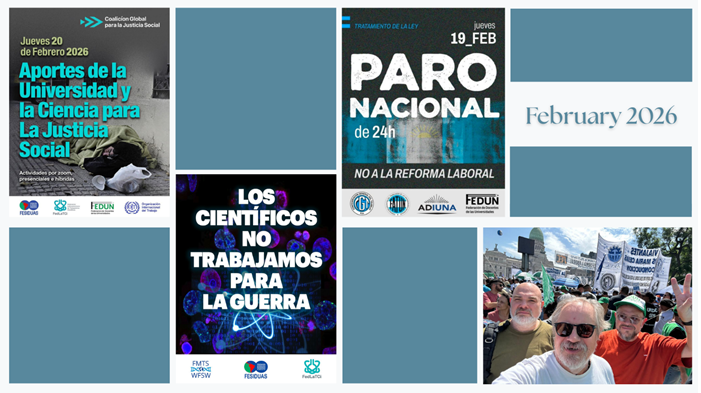
Federación de Sindicatos de Docentes Universitarios de América del Sur
_______________________________________________
_______________________________________________
Meetings and Activities
February 2026:
99th Executive Council Meeting – 09 & 11 Feb 2026
 The 99th Executive Council (EC) of the WFSW was held remotely via videoconference on 9 and 11 February 2026. The sessions were spread across four meetings totaling eight hours to accommodate participants from all continents — from China to South America — ensuring full engagement despite time zone differences.
The EC’s work focused on two interrelated priorities: analysing key documents on the evolving global geopolitical situation and advancing the strategic direction and operational activities of the Federation.
Opening Remarks
In their opening address, Co-Presidents Jean-Paul Laine and Elies Molins highlighted the international context, marked by rapid political, economic, social, and ideological changes, as well as the growing global challenges, including inequalities, environmental crises, and conflicts. They emphasised the WFSW’s mission to promote a sustainable world, defend science against military or purely profit-driven uses, and ensure that research remains accessible and shared internationally. They also stressed the importance of upholding academic freedom, fostering scientific cooperation, and the role of the UNESCO sector in formulating statements and recommendations, while underlining the need to strengthen ties with affiliated organisations so that the Executive Council serves as a forum for the reciprocal exchange of information and proposals.
Key Discussions
The EC focused on the global geopolitical situation and the strategic direction of the Federation:
- analysis of papers by Mehdi Lahlou (Morocco) and Frederico Carvalho (Portugal) on current crises and global confrontations, with emphasis on the Middle East, Africa, and international tensions – “Géopolitique de la soumission : quand les peuples paient le prix de l’arrogance impériale et des alliances extrême-droitières / théocratiques. Le Moyen-Orient et l’Afrique” and “Geopolitics of chaos on a path toward global confrontation”.
- discussion of the need for a truly democratic United Nations, with special attention to Sudan, Ukraine, Gaza, and Venezuela, based on a text by Elies Molins (Spain).
- federation priorities included scientific freedom, researcher precarity, sustainable development, ethical use of science, and opposition to weapons of mass destruction.
- integration of Artificial Intelligence for peace and sustainable development and the promotion of greater participation of youth, women, and Global South countries.
- operational improvements: adoption of an internal cloud platform for document sharing, preparation of the 2025 Annual Report, and membership recruitment.
Strategic Outlook and Projects
The EC reviewed strategic documents and materials to guide the future of the WFSW, including the Strategic Plan Flyer, the presentation by Elies Molins: “The WFSW on the Road to its Centenary”, the draft Annual Report 2025, and contributions from the OTC – Organização dos Trabalhadores Científicos and other affiliated organisations (Portugal). The discussion focused on preparing the Federation for its centenary, strengthening internal coordination, and ensuring the active participation of all affiliated organisations in defining future priorities, in anticipation of the 24th General Assembly later in 2026.
Several key projects and initiatives were approved:
- International Decade of Sciences for Sustainable Development – Deep Blue Lighthouse Initiative (DeBLI) (2027–2033) to inspire future ocean explorers – HAN Xiqiu (CAST-Chine)
- Open Science from an African Perspective, a research and training program aligned with UNESCO Sustainable Development Goals – Dina BACALEXI (SNTRS-CGT-France)
- Open Science in Portuguese-speaking countries, symposiums bringing together specialists to discuss open science, with prospective partners including OTC, REALP, CREATE (University of Évora), WFSW, and FCT (Portugal)
- the role of the scientific community in promoting peace and opposing war, multidisciplinary symposiums addressing ethical responsibilities of researchers, generating joint statements, awareness campaigns, and initiatives such as the “School of Peace through Science” prize. Prospective partners include OTC, CPPC, MPPM, FENPROF, Scientists for Global Responsibility (UK), and WFSW.
- the collection of testimonies from scientists in conflict zones, highlighting the ethical opposition to the use of science for war.
Documents Adopted
- Géopolitique de la soumission : quand les peuples paient le prix de l’arrogance impériale et des alliances extrême-droitières / théocratiques. Le Moyen-Orient et l’Afrique.
- Geopolitics of chaos on a path toward global confrontation.
- Strengthen a Truly Democratic United Nations — Before It Is Too Late. Sudan, Ukraine, Gaza, Venezuela — what will come next? (Strengthen a Truly Democratic United Nations – FMTS)
Decisions and Next Steps
The EC agreed on clear actions to strengthen the Federation’s global role:
- invite affiliated organisations and scientists to support the Stand Up for Science initiative.
- encourage submission of projects to UNESCO by 27 February 2026.
- encourage participation in EUROCADRES projects.
- encourage all affiliated organisations to review and contribute to the strategic plan.
- create cloud space for each affiliated organisation to share documents and initiatives.
- complete and publish the Annual Report 2025.
- recruit new members, with focus on youth, women, and underrepresented regions.
- develop the “Scientists’ Voices” initiative to collect testimonies from scientists in war-affected countries
- integrate ethical commitments across all WFSW activities.
The 99th meeting of the EC reaffirmed the WFSW’s long-standing commitment to scientific solidarity, ethical responsibility, and international cooperation, guaranteeing the successful completion of its 24th General Assembly, which is scheduled to take place next September, while also looking towards its own evolution and actions to be developed in order to ensure the promising future that is envisioned on the way to the centenary celebrations of its foundation in the year 2046.

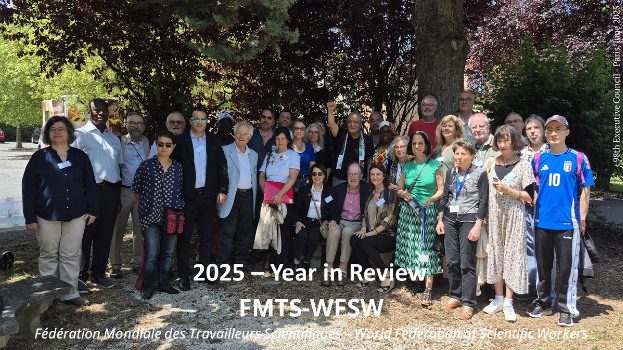
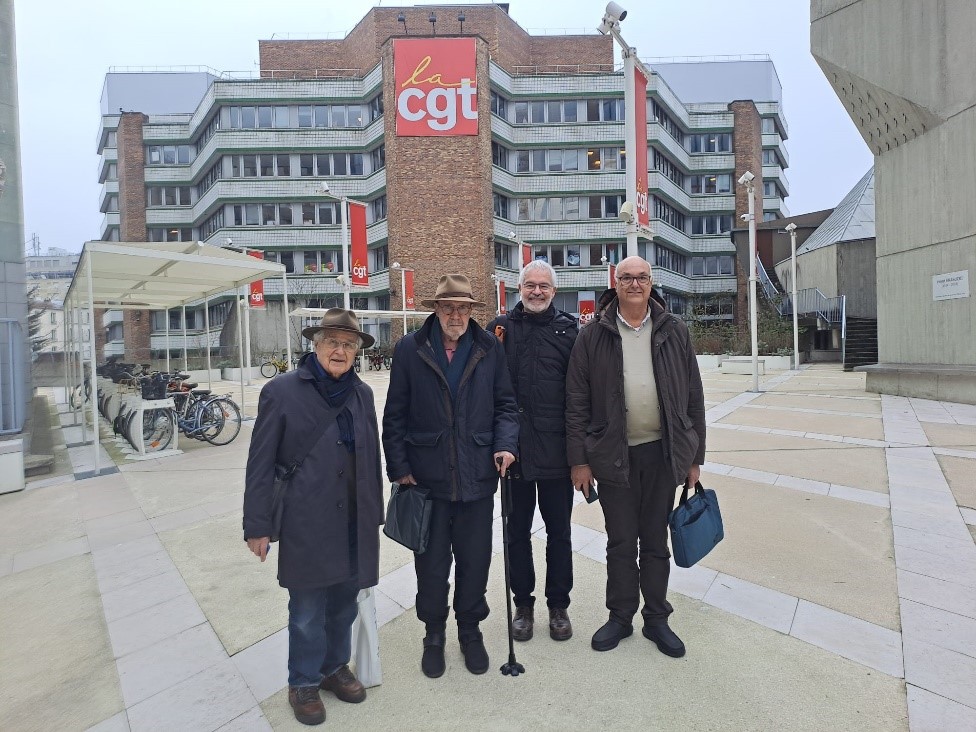
The WFSW Bureau (Co-Presidents, Secretary General and Treasurer) gathered in Paris during the 99th Executive Council, held online.
UNESCO Participation Programmes – 05 Feb 2026 – Zoom meeting focused on UNESCO participation programmes. The priorities of these programmes are Africa, youth, and gender equality. Projects may be regional (e.g., within Africa) or inter-regional (involving countries from two different regions). The maximum funding per project is 38,000 US dollars, and the submission deadline is 27 February 2026. Projects require the support of the relevant National Commissions of UNESCO. (UNESCO Sector)
Within this framework, the WFSW has submitted a project proposal, currently under evaluation, entitled “Open Science from an African Perspective: Research and Training School”, coordinated by Dina Bacalexi. The project aims to promote Open Science in Sub-Saharan Africa through a multidisciplinary training programme aligned with the Sustainable Development Goals, fostering cooperation between academic institutions, civil society, and international partners.
Preparation of the next General Assembly Meeting – 5 Feb 2026 – A preparatory meeting was held for the 24th General Assembly, as well as the 100th and 101st Executive Council meetings, to be held in Mexico City from 31 August to 4 September 2026. Discussions focused on the preliminary programme, including a symposium and thematic workshops, budget considerations, potential sponsors, participants and other logistics issues. In parallel, an exhibition of scientific providers and a poster session will be organised, where affiliated organisations are invited to present their work and activities. Representatives from scientific associations, universities, and companies will also be invited.
 International Day of Women and Girls in Science 11 Feb 2026
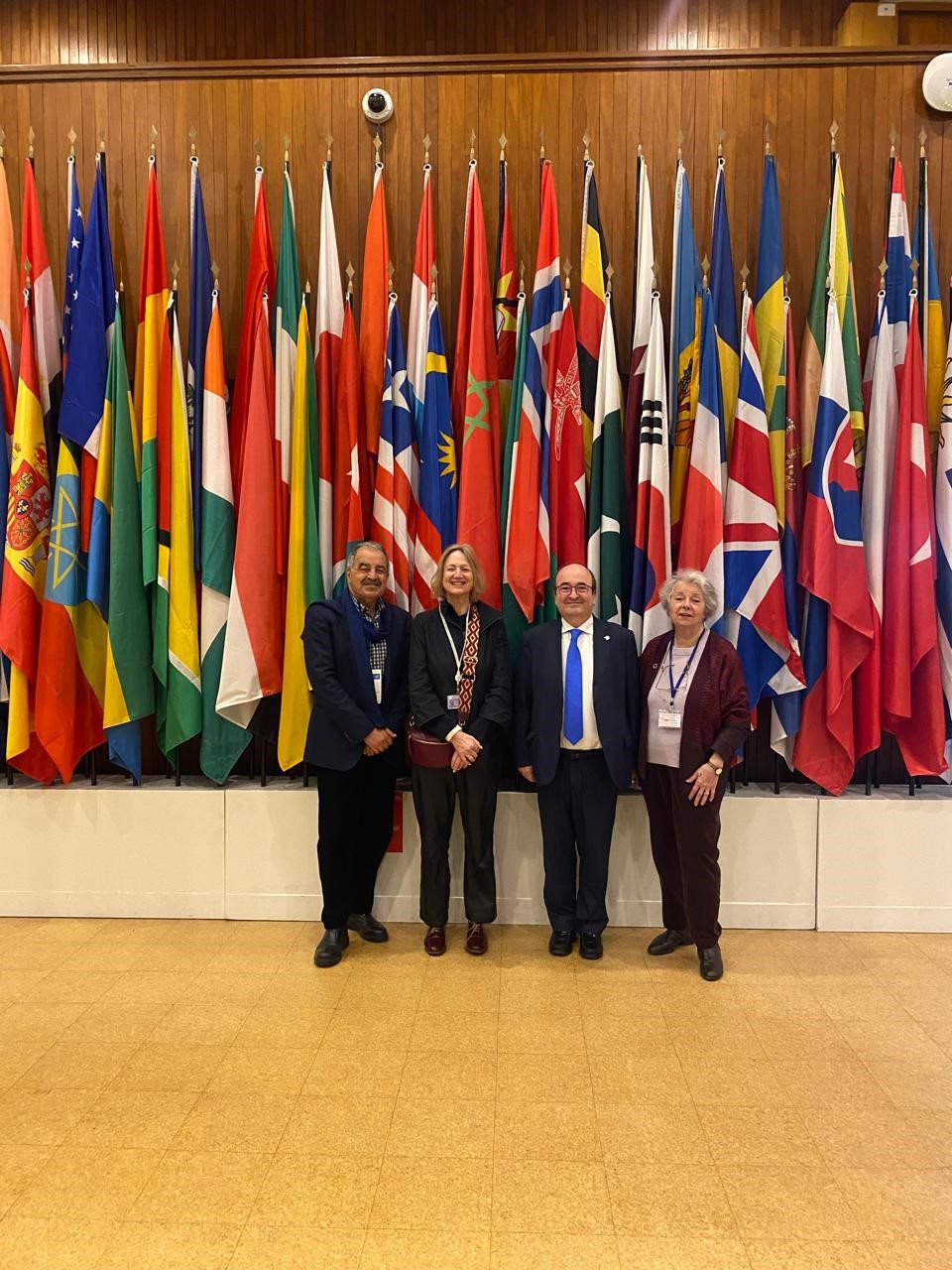
The WFSW was represented by Mehdi Lahlou, Coordinator of the UNESCO Sector, at the International Day of Women and Girls in Science, held at UNESCO Headquarters in Paris as a hybrid in-person and online event. The programme highlighted the positive impact of inclusivity in scientific disciplines, featuring discussions on health research, cybersecurity, artificial intelligence, and scientific entrepreneurship.
At UNESCO, Mehdi Lahlou, alongside the Spanish Ambassador to UNESCO and representatives from the Peace and Dance collective.
Bureau Meetings – 03, 17 & 23 Feb 2026 – Meetings were held to review ongoing activities and to prepare sessions of the International Secretariat, meetings with affiliated organisations, working groups, and the 24th General Assembly.
The discussions focused on strategic matters of the Federation and major international developments, emphasising the need to balance public statemenJts with in-depth analysis and to prepare documents on geopolitics and ocean sustainability.
The Bureau also oversaw the preparation and subsequent review of the 99th Executive Council (99EC), including its structure and organisation, and examined the requirements and procedures for submitting the Federation’s project to UNESCO, namely the proposal coordinated by Dina Bacalexi.
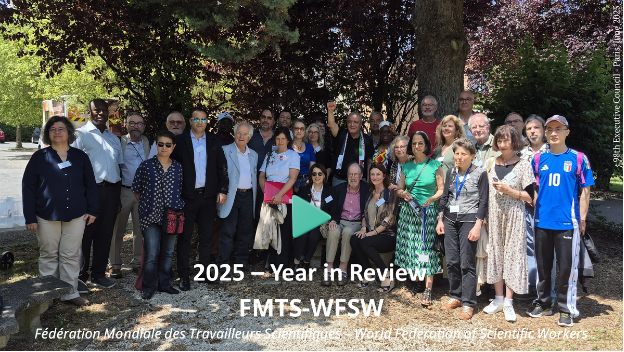
Communication Sector – 24 Feb 2026 – The meeting focused on preparing the upcoming WFSW newsletters, establishing who will handle translations and reviews, producing the 2025 “Year in Review” video, and updating the Annual Report to be sent to the IS – International Secretariat – for collection of contributions and approval, with the newsletter planned for release in early April.
____________________________________________
Glossary
WFSW – World Federation of Scientific Workers
FMTS – Fédération mondiale des travailleurs scientifiques
OTC – Organização dos Trabalhadores Científicos
FCT – Fundação para a Ciência e a Tecnologia
REALP – Rede de Associações de Língua Portuguesa
CREATE – Centre for Research in Anthropology and Health
SNTRS-CGT – Syndicat National des Travailleurs de la Recherche Scientifique
CNRS – Centre National de la Recherche Scientifique
UCAD – Université Cheikh Anta Diop de Dakar
EC – Executive Council
IS – International Secretariat
DeBLI – Deep Blue Lighthouse Initiative
CPPC – Conselho Português para a Paz e Cooperação
MPPM – Movimento pelos Direitos do Povo Palestino e pela Paz no Médio Oriente
FENPROF – Federação Nacional dos Professores
AI – Artificial Intelligence
____________________________________________
Editorial Board
WFSW Communication Sector
Editorial coordination: Joana Santos & Sylviane Lejeune
Editorial review: Frederico Carvalho (Vice-President of the Executive Council)
French translation: Florence Lejeune
Institutional validation: Jean-Paul Lainé & Elies Molins (Co-Presidents)
____________________________________________
Get involved
Send your news, events and reports for inclusion in next month’s Newsletter to:
communication@fmts-wfsw.org
FMTS-WFSW • fmts-wfsw.org
You are receiving this email because you are on our distribution list
____________________________________________________
Join Us